If you’ve spent any time exploring kratom communities online, you’ve probably noticed a familiar question popping up again and again: can you actually grow kratom yourself, and if so, how long before you’re holding your own harvest?
It’s a fair question. Kratom (Mitragyna speciosa) has spent centuries growing wild across the humid forests of Southeast Asia, and the idea of cultivating your own tree at home has an obvious appeal, a closer connection to the plant, a sense of self-sufficiency, and maybe a little bragging rights among fellow enthusiasts.
But here’s the honest answer up front: growing kratom is possible, but it is not quick, and it is not effortless. This is a tropical tree with specific needs, a stubborn germination process, and a multi-year runway before it produces anything usable.
Can You Actually Grow Kratom Yourself?
Technically, yes. Kratom trees aren’t exclusive to Southeast Asian jungles; they’ve been successfully raised by hobbyists in greenhouses, sunrooms, and backyard gardens around the world. That said, “possible” and “easy” are two very different things.
Kratom is a demanding plant that evolved in one of the most specific climates on Earth: hot, humid, and consistently wet, with rich tropical soil and dappled sunlight from a dense forest canopy. Recreating those conditions outside of Indonesia, Thailand, or Malaysia takes real effort.
Choosing the Right Environment for Growing Kratom
Kratom growers need to select appropriate growing locations between indoor and outdoor spaces as a fundamental step. People who experience Southeast Asia-type tropical forest weather conditions should consider cultivating Kratom outdoors.
The majority of Kratom enthusiasts who live in areas with cold climates must establish indoor growing chambers to regulate environmental conditions.
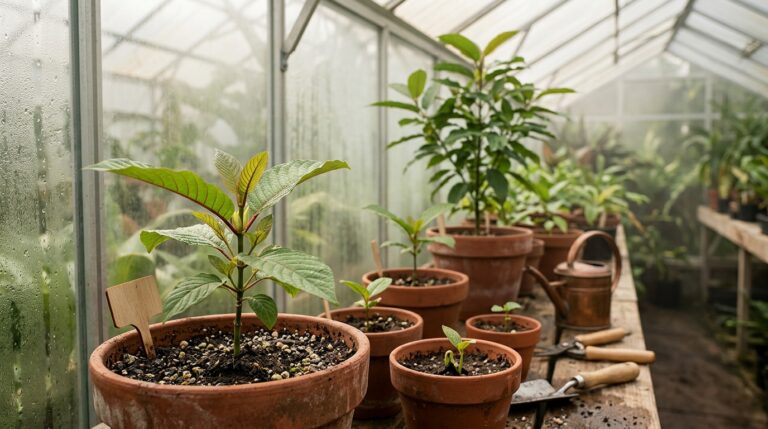
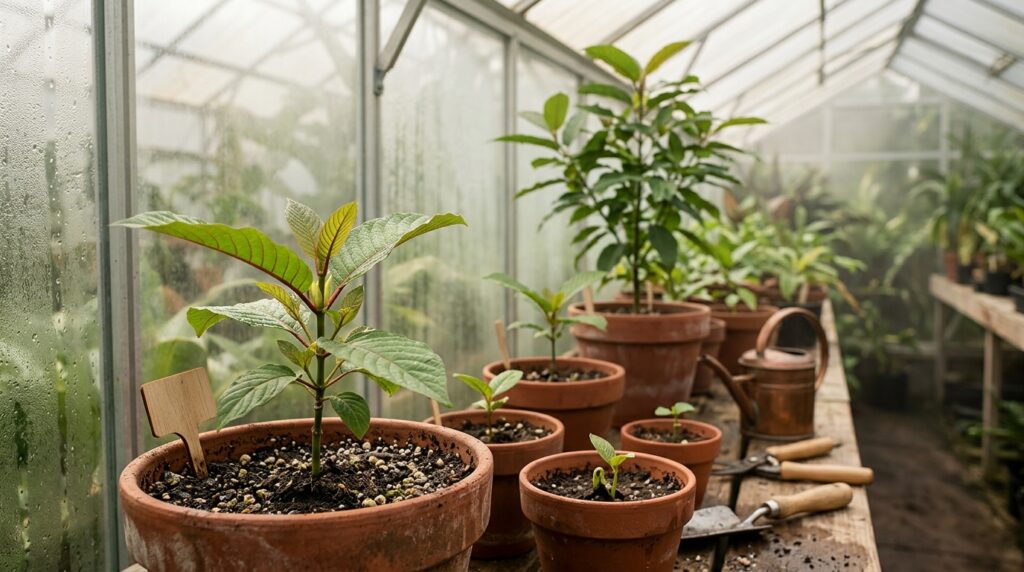
A greenhouse provides the best conditions for indoor cultivation by maintaining tropical temperatures while safeguarding plants from pests and external temperature fluctuations.
Ventilation requires proper management to prevent excessive humidity from creating an environment where fungus can grow.
Additional heating systems and humidifiers should be implemented during chilly winter months to create suitable conditions for effective growth.
Key Considerations for the Environment
- Sunlight Exposure: Kratom requires ample sunlight or artificial light that mimics the sun’s spectrum. Aim for at least 6 hours of sunlight per day.
- Air Circulation: Good air circulation helps prevent diseases. Use fans when growing indoors to ensure air movement.
- Temperature Control: Maintain an indoor temperature between 70°F and 90°F. Use heating mats under seed trays if necessary.
- Humidity Levels: Keep the humidity high, around 70-90%. Use a room humidifier or mist plants frequently.
- Soil Quality: Use rich, fertile, well-draining soil. Amend with perlite or vermiculite to improve drainage if needed.
- Watering Routine: Water plants deeply but allow the soil to dry slightly between waterings to avoid root rot.
- Fertilization: Feed with a balanced, slow-release fertilizer that is not too high in nitrogen to promote healthy growth without burning the plant.
Challenges in Growing Kratom
Here are some of the most common challenges, each detailed under its subheading with solutions to help you overcome them.
1. Adapting to Non-Tropical Climates
Kratom requires tropical environments to thrive, so achieving high humidity along with warm temperatures is essential when cultivating it in non-tropical climates.
For successful cultivation of Kratom in less tropical conditions, one should grow it indoors to regulate environmental conditions. The combination of humidifiers, heating mats or space heaters, and grow lights will create a suitable environment for Kratom growth when direct sunlight is scarce.
2. Ensuring Soil Quality
Proper growth of Kratom depends on soil that is conducive to cultivation and has good drainage to prevent root rot. Planting in native soil that is unsuitable requires mixing a high-quality potting mix with perlite or vermiculite to improve groundwater flow.
3. Managing Water Properly
The survival of Kratom plants depends on effective water control because insufficient or excessive water creates problems. The soil of Kratom plants requires ample moisture but must avoid becoming saturated.
4. Controlling Pests and Diseases
The growth of Kratom plants is seriously affected by pests and disease occurrences. Plants should be checked regularly for signs of both infestation along illness through observation of discoloured leaves and stunted growth while looking for visible pests.
For early pest control, use organic pesticides alongside neem oil, as these methods are safe for plants and the environment. Good plant ventilation must be maintained to decrease the possibility of fungal diseases developing.
5. Navigating Legal Restrictions
The legality of Kratom cultivation depends on regional regulations thus requiring proper comprehension of specific laws that need to be followed. Monitor the latest Laws with their potential effects on Kratom farming throughout your region.
How Long Does It Take to Grow Kratom?
This is the question most people really want answered, and the short version is: kratom takes months to sprout and years to reach a usable, mature size. There’s no shortcut here; this is a slow-growing tropical hardwood, not a backyard vegetable. Let’s break the growth cycle down stage by stage so you know what to expect at each point.
Stage 1: Germination (1–6 Weeks)
Germination is often where kratom-growing attempts stall out before they even begin. Kratom seeds need to be fresh, ideally planted within days of being collected, because their viability drops off quickly after harvest.
Even with optimal warmth, humidity, and nutrient-rich soil, germination rates remain unpredictable, and it can take anywhere from a couple of weeks to over a month before you see any sign of a sprout. Many growers plant seeds in batches specifically because a large percentage simply won’t take.
Stage 2: Seedling Stage (3–6 Months)
Once a seed germinates, you’re not out of the woods. Kratom seedlings are fragile, grow slowly during this phase, and are highly sensitive to shifts in temperature and moisture. Consistent warmth (roughly 70–90°F) and high humidity are essential for the plant to establish a strong root system.
Stage 3: Sapling to Small Tree (1–2 Years)
As the plant matures past the seedling phase, it begins developing a woody stem, and growth starts to pick up noticeably. With steady care, regular pruning, nutrient-rich soil, and a disciplined watering schedule, a kratom plant can reach several feet in height within this one-to-two-year window.
Stage 4: Mature Tree (3–5+ Years)
Full maturity is a multi-year commitment. In native tropical environments, wild kratom trees can exceed 50 feet, but trees grown in home gardens, greenhouses, or containers usually top out closer to 10–20 feet due to pruning and space constraints.
Does Climate Change the Timeline?
Absolutely, and this is one of the biggest variables in how long the whole process takes.
- Tropical, outdoor conditions are where kratom grows fastest and most naturally. In climates similar to its native Southeast Asia, hot, humid, with regular rainfall and rich soil, trees can reach 20 feet or more within just a few years, benefiting from natural sunlight and consistent moisture without much intervention.
- Indoor or greenhouse growing in non-tropical regions is a slower road. You’ll need to artificially maintain humidity above 70% and temperatures in the 70–90°F range, and even with diligent care, growth tends to lag behind what you’d see in a natural tropical setting. Trees grown this way also tend to stay smaller overall.
How to Grow Kratom: A Step-by-Step Guide
If you’ve weighed the legal considerations and the multi-year timeline and you’re still interested, here’s a practical walkthrough of how to actually approach growing kratom from start to finish.
Step 1: Start With Seeds or Cuttings
You’ve got two starting points, and they come with very different odds of success.
- Seeds need to be fresh, ideally planted within a few days of being harvested, since viability drops sharply afterwards. Even under ideal conditions, expect a low germination rate, so plan to plant more seeds than you think you’ll need.
- Cuttings taken from an already-mature kratom tree tend to root and establish faster than seeds, making them a more dependable option if you can source them. Skipping the unpredictable germination stage entirely is a major advantage for beginners.
Step 2: Decide Between Indoor and Outdoor Cultivation
- Outdoor cultivation works best if you live somewhere genuinely tropical, with consistent warmth in the 70–90°F range and high humidity year-round. In climates like this, kratom can grow vigorously and reach impressive heights with relatively natural care.
- Indoor or greenhouse cultivation is the path for anyone in a temperate or seasonal climate. You’ll need to replicate kratom’s native environment using grow lights, humidity-control systems, and a deep container that gives the roots room to grow.
Step 3: Get the Growing Conditions Right
Kratom is picky, and getting these four elements right will make or break your results:
- Soil: Aim for well-draining, nutrient-rich soil with a slightly acidic pH, somewhere in the 5.5–6.5 range. Steer clear of compacted or heavy clay soil, which can suffocate the roots.
- Light: Kratom does well with partial to full sunlight. Indoor growers typically need powerful LED grow lights to replace the natural tropical sun.
- Temperature: Keep the plant consistently between 70–90°F. Kratom has zero tolerance for frost, so if you’re growing outdoors in a seasonal climate, plan to bring it inside before temperatures drop.
- Humidity: Aim for levels above 70%. Dry air is one of the fastest ways to trigger leaf drop and stunted growth.
Step 4: Stay on Top of Watering and Nutrients
Kratom likes consistently moist soil, but “moist” is not the same as “soaked.” Overwatering is one of the most common ways home growers lose their plants to root rot, while underwatering causes stress and slows growth to a crawl. Finding that middle ground takes some observation and adjustment over time.
Step 5: Watch for Pests and Diseases
Like most tropical plants, kratom attracts its fair share of unwanted visitors. Aphids, spider mites, and scale insects are common culprits, and insecticidal soap or neem oil are generally effective, low-intervention treatments. Excess moisture can also invite fungal issues, so good airflow around the plant and a disciplined watering schedule go a long way toward prevention.
Step 6: Harvesting Your Leaves
Once your tree reaches the 2–3-year mark and shows signs of maturity, it’s time to harvest. Older, darker leaves tend to carry the highest alkaloid content, so timing matters. You can hand-pick mature leaves individually or prune entire branches for a larger single harvest, then dry the leaves in a warm, dark space away from direct sunlight.
Using Kratom: What Happens After the Harvest
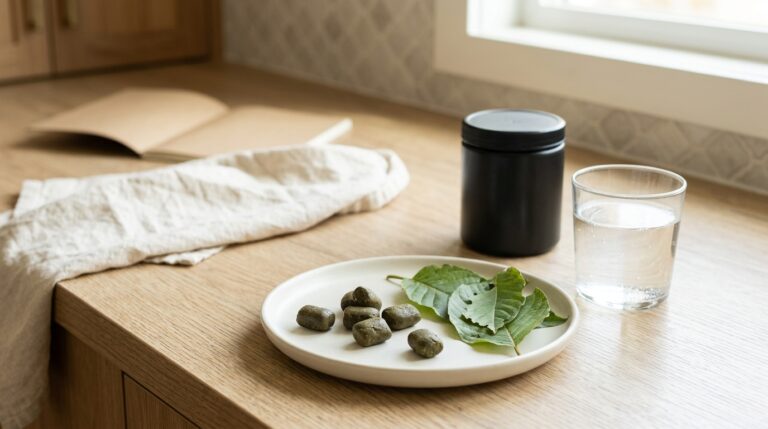
Once you’ve grown, harvested, and dried your own kratom leaves, or if you’re simply exploring kratom that’s already been commercially processed, the next natural question is how people actually use it. Kratom leaves themselves can be dried and crushed into a fine powder, which is the most traditional and versatile form.
A few things are worth keeping in mind if you’re new to using kratom, whether homegrown or store-bought:
- Freshness and storage matter. Just like the plant itself, dried kratom leaf and powder can lose potency over time if it’s not stored properly, away from light, heat, and moisture.
- Individual sensitivity varies widely. Alkaloid content in kratom can differ significantly based on the strain, growing conditions, leaf maturity, and processing method.
- It’s not risk-free. Kratom can interact with other substances, including SSRIs, SNRIs, and other prescription medications, and it isn’t recommended during pregnancy or while nursing.
- Regulatory status affects sourcing. The FDA has not approved kratom as a dietary supplement, and quality can vary enormously between suppliers.
- Legal purchase age applies. In most jurisdictions where kratom is legal, sale is restricted to adults 21 and older, similar to how many tobacco and vape products are regulated.
Final Thoughts
Growing your own kratom tree is absolutely achievable, but it’s a project built on patience rather than instant gratification. From a finicky germination process to years of steady care before your first real harvest, this is a long-haul commitment rather than a weekend project.
If you’ve got the climate, the space, and the willingness to wait, the payoff is genuinely rewarding: a direct, hands-on relationship with a plant that most people only ever encounter as a finished product on a shelf.
If the multi-year timeline isn’t for you, that’s completely understandable too. Commercially grown kratom, cultivated in its native tropical environment and often backed by lab testing, remains the far more practical route for most people who simply want reliable access without the years-long wait.